Play Based Learning: 6 Simple Activities to Promote Child Development
Discover 6 simple OT-approved play based learning activities that boost child brain development and practical parenting tips for your child’s development that you can use today.
As parents, it’s easy to feel like you’re not doing “enough” for your young children. We all want our children to become the best versions of themselves they can be, and it can be easy to feel like we as parents should be doing more to promote their development, especially in the early years.
Because of this, we tend to fill our schedules with activities, classes, and clubs while neglecting things like family dinners, free time at home, and play time for our children. Although play may seem like something children do to fill the time between activities or events, it is actually one of the most brain-boosting things children can do.
As a pediatric occupational therapist, I have spent years training children and their families in early education on the importance of play based learning and the various skills it addresses. In this post, I will give you 6 everyday play based learning activities that will boost your child’s brain development, problem-solving skills, and give you an OT Pro Tip for implementing these simple, yet meaningful activities in your home.
Why Play Based Learning Matters for Child Development
For a child, play based learning is a crucial part of development that cannot be overlooked. Play develops and strengthens neural pathways that are needed for future success as children continue to grow. Without this time, children may struggle with essential skills, such as emotional regulation, sensory processing, critical thinking, and motor skills.
There are numerous benefits of play-based learning. Allowing children adequate time for play, particularly open-ended or free play, provides countless benefits such as better physical development, cognitive development, social-emotional development, and much more.
And the best part? They love it!
6 Play Based Learning Activities that Boost Child Brain Development
Child-directed experiences and play activities typically require little preparation for adults or other family members and can provide hours of fun for your little ones while also developing many important skills. Here are my top six OT-approved child brain development activities to boost growth and learning, and the specific skills they address.
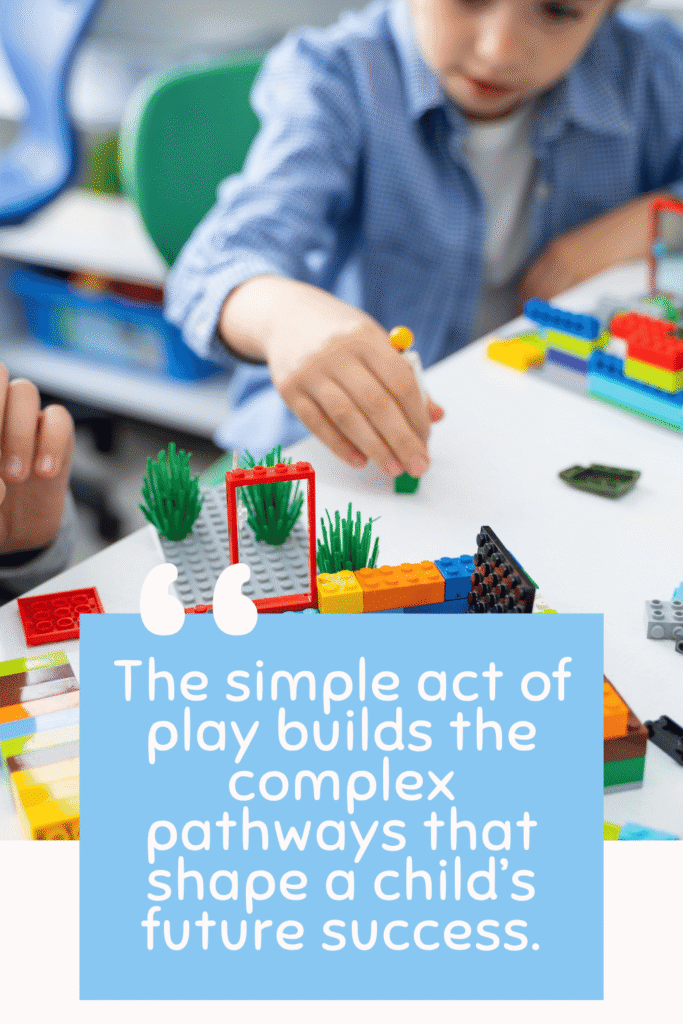
#1 Building with Legos or Blocks
Skills addressed:
- Visual motor skills
- Fine motor manipulation
- Early math concepts
- Problem-solving skills
- Emotional Regulation
Building with blocks is a great way for children to refine their visual and fine motor skills as well as develop critical thinking skills as they try creating different objects and structures. They can learn simple math concepts such as shapes, counting, and even addition and subtraction. Not only that, but building with blocks takes patience, perseverance, and resiliency as children work through the trial and error process of achieving their desired creation.
OT Pro Tip: To address visual perceptual skills, try hiding the blocks in partially visible locations around the room for your children to find as they build!
#2 Imaginative and Pretend Play
Skills addressed:
- Creativity
- Language development
- Life skills
- Sensory regulation
Child-directed pretend play is one of the most important ways children learn about the world around them. By pretending to be a chef, pirate, or doctor, children develop important spoken language and life skills without even realizing it. In addition, they learn how to regulate their sensory system more effectively, helping them gain self-regulation skills as they begin to encounter more challenging environments and situations.
Unsure how to support your child’s sensory processing? Check out my post on Sensory Processing 101: What Every Parent Needs to Know
OT Pro Tip: Encouraging your child to “dress-up” during pretend play can promote important skills such as dressing, buttoning, and zipping.
#3 Creative Crafts: Painting, Drawing, and More
Skills addressed:
- Visual motor and spatial skills
- Fine motor coordination
- Critical thinking
- Pre-writing and pre-reading skills
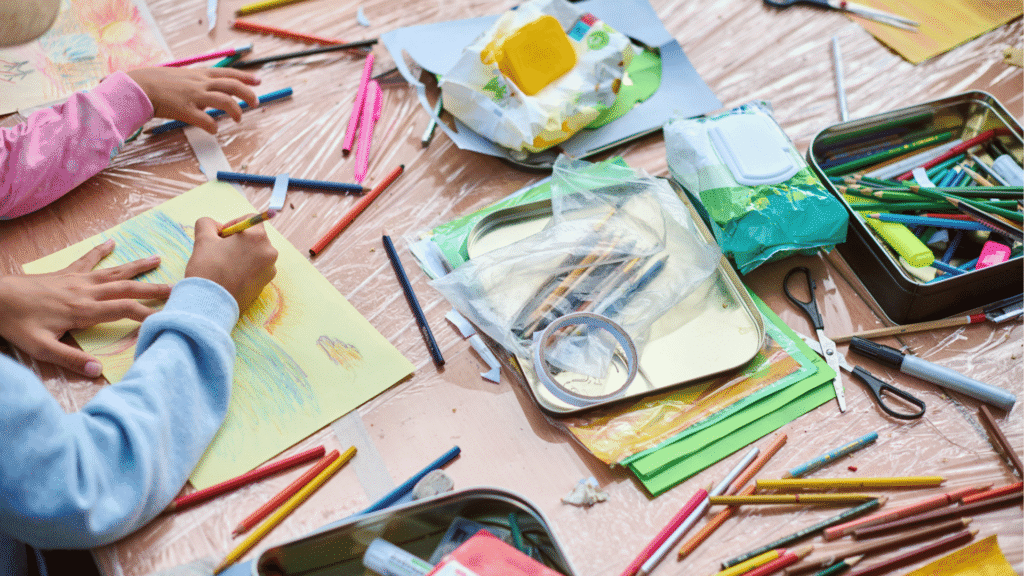
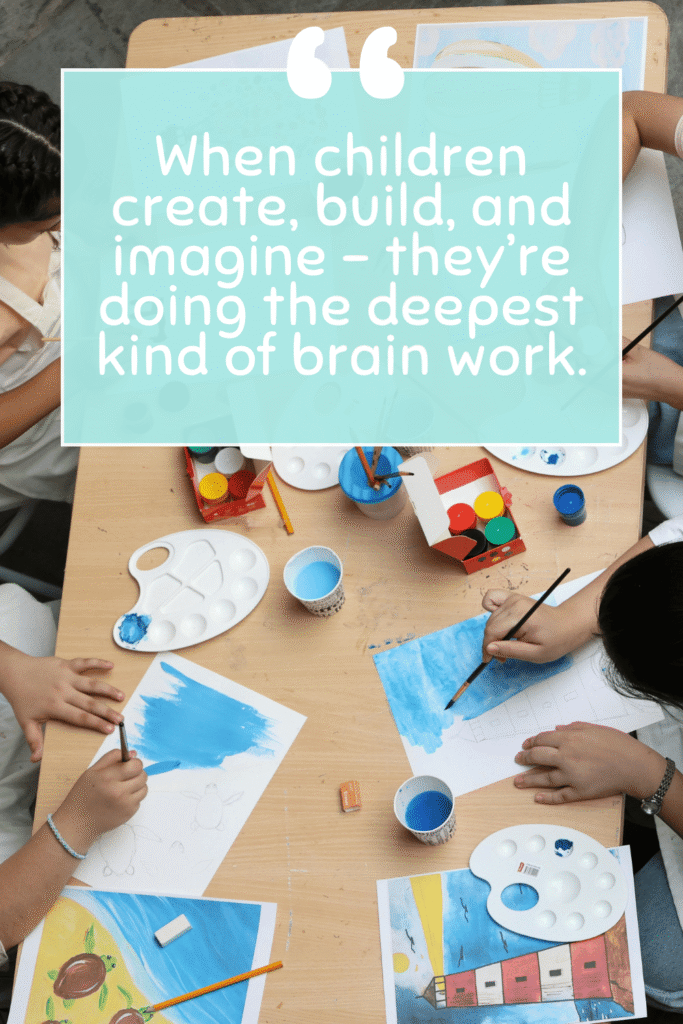
Providing children with basic craft materials such as paper, scissors, crayons, glue, etc. with no direct instruction may feel uncomfortable at first, but their young minds will quickly begin to come up with different ways to use the materials and what they would like to create. This allows important skills such as creativity, visual spatial awareness, problem-solving, hand-eye coordination and time management to develop as they work to create their own masterpieces. Crafting is also a great way for children to refine their visual motor and fine motor skills in preparation for reading and writing.
OT Pro Tip: Encourage proper writing grasp by giving children broken crayons to color and draw.
#4 Nature Play
Skills addressed:
- Sensory regulation
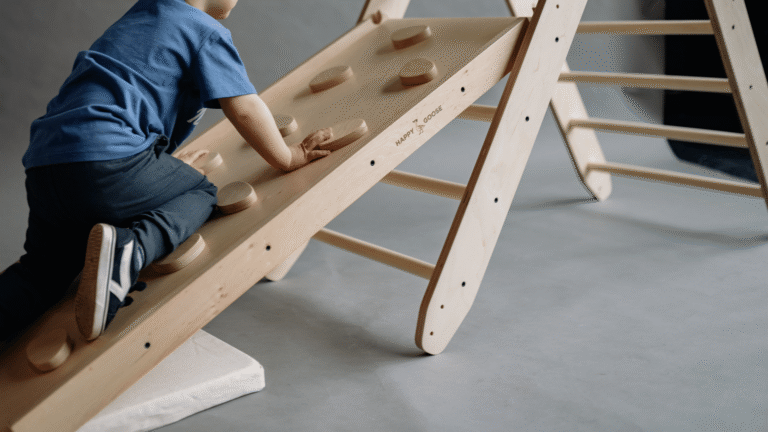
- Fine and gross motor skills
- Resiliences
- Early science concepts
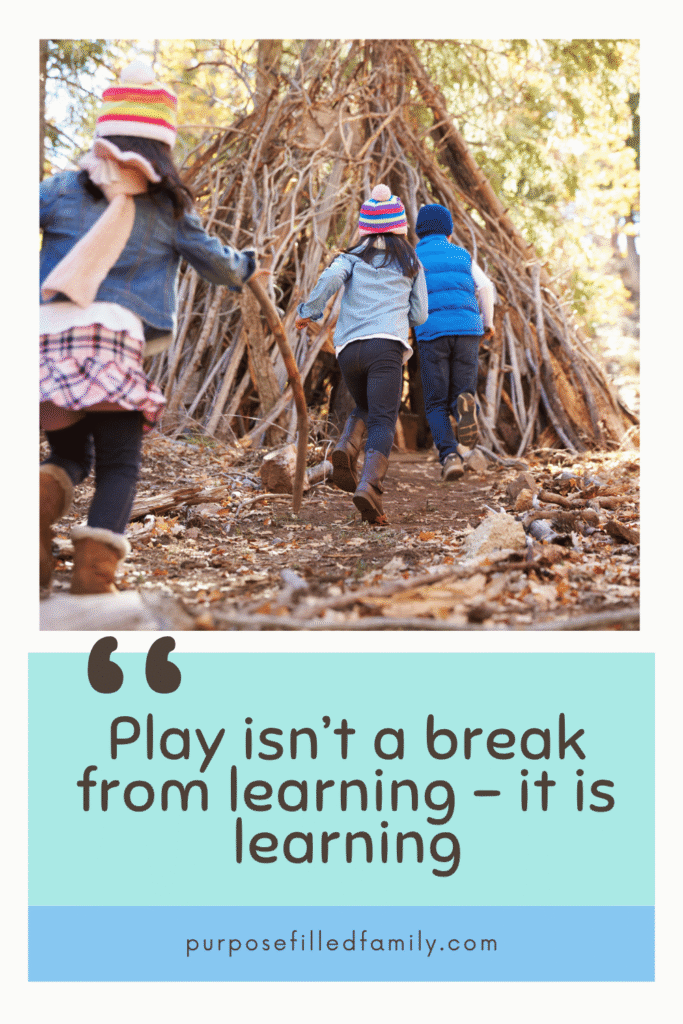
I could talk all day about the endless benefits of nature! For children, outdoor play provides opportunities for developing their fine (small) motor and gross (large) motor skills in ways that no other environment does. It also helps to develop their sensory system in a way that is gently challenging but not overstimulating.
For more information on the benefits of nature play, check out my post on The Benefits of Nature Play (insert link).
OT Pro Tip: Lose the shoes! Encouraging your child to explore nature barefoot can provide important sensory input that your child needs to develop a mature sensory system.
#5 Looking at Books
Skills addressed:
- Visual spatial awareness
- Early literacy skills
- Cognitive development
- Attention span and focus
We love books in our house, and my boys have been “reading” books since they were babies. Even before children know how to read, exploring books can play a crucial role in increasing their visual spatial skills as they look at the words and pictures as well as developing their fine motor skills as they work to turn one page at a time. This simple activity can also promote early literacy skills that they will need as they begin to read.
OT Pro Tip: An easy way to include books in early learning is to ask your child questions about the pictures in the book (i.e. “Where is the boy?”) and encourage them to use their index finger to point out the object.

#6 Cooperative and Peer Play
Skills addressed:
- Social skills
- Problem solving
- Communication skills
- Conflict resolution and negotiation skills
- Emotional regulation
Similar to imaginative play, learning to play cooperatively with other children in a small group is an important skill that helps to develop many areas in the brain, including language skills, social development and interpersonal skills as well as many higher level cognitive concepts such as problem-solving and emotional regulation. Peer play is also the best way for children to begin to learn how to work as a team and resolve conflicts independently.
OT Pro Tip: When possible, try not to intervene when a conflict arises between children, but observe how they handle the problem and step in only when necessary.
The Power of Play Based Learning in Everyday Life
As you can see, play-based learning is a vital part of every child’s development in so many ways. So don’t be afraid to give your child the free time to just play – remembering that their little minds are growing through these everyday activities in more ways than you realize.
If you’re looking for simple parenting tips for a play-based approach for development, start with these simple ideas: encourage building, imaginative play, outdoor exploration, peer play, and shared reading. These simple moments are some of the most powerful brain development activities you can provide for your children.
Leave us a comment and let us know which activities your child enjoys most!