5 Surprising Activities for Correcting Pencil Grip For Your Child
Need help correcting pencil grip in your child? Discover 5 surprising occupation therapist activities that boost fine motor strength, focus, and handwriting confidence.
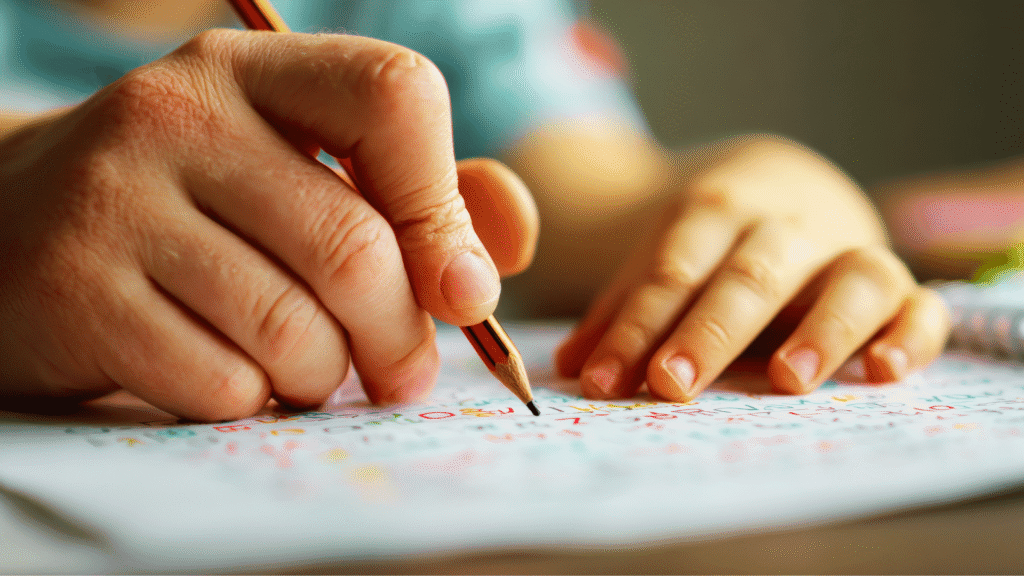
As a school-based occupational therapist, one of the most common issues that I address in students is an inefficient child’s pencil grip. While it may seem like a small detail, the way a child holds a pencil can impact much more than handwriting. A functional pencil grip supports not only school success but also everyday independence.
If you notice that your child is struggling to use an appropriate proper pencil grip when coloring, drawing, or writing, you may wonder, “what could I possibly do to help correct their child’s pencil grasp?” The good news is that there are many things that can be done to help children develop an appropriate grip on pencils, crayons, and markers right at home.
Simple fine motor activities like play dough, building with blocks, and stringing beads can be effective at correcting pencil grip. In this post, though, I’ll share five surprising, OT-approved activities to improve functional pencil grasp – all backed by research and designed to strengthen the hand muscles needed for confident writing.
Why Correcting Pencil Grip Matters for Kids
An inefficient incorrect pencil grip in children may be a red flag for fine motor skills challenges, or small body movements. These challenges can lead to additional problems such as difficulty with zipping, buttoning, opening and closing food packages, and much more. Difficulty with fine motor skills can have a negative impact on children’s success in school and at home as they grow.
If left unaddressed, poor pencil grip may cause:
- Hand fatigue or pain during writing
- Shortened attention span and endurance for schoolwork
- Avoidance of writing tasks or even behavior struggles
- Lower confidence and motivation in the classroom
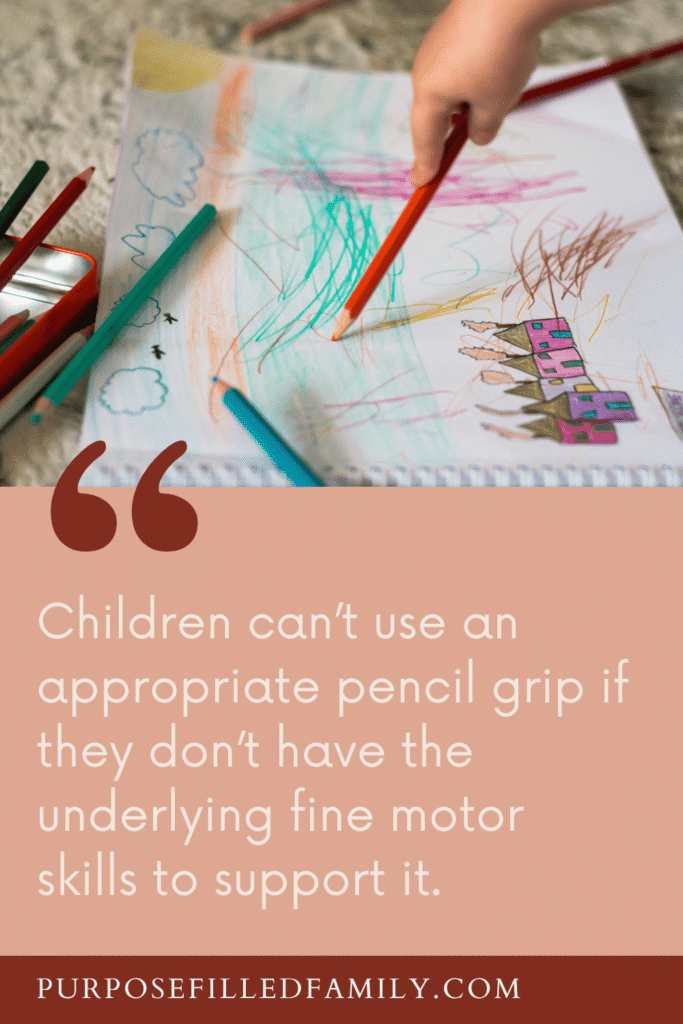
It is important to remember that a child cannot use an appropriate dynamic tripod pencil grip if they do not have the underlying fine motor skills. That’s why helping children build strong hand strength is so important. The right activities like the ones listed below can set your child up for success both at school and at home.
What is a Functional Pencil Grip?
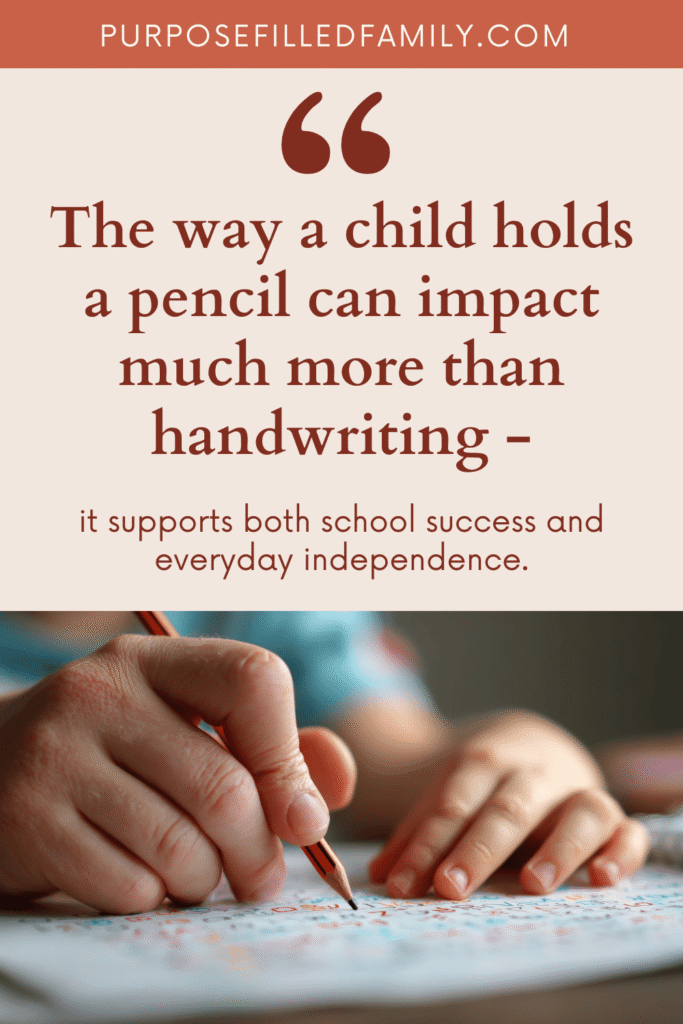
A pencil grasp development is considered functional pencil grip or appropriate when the pencil rests comfortably between a person’s thumb, index finger, and middle finger while the remaining fingers (ring finger and little fingers) are tucked in toward the palm of the hand. This type of grip requires less energy, allowing children to write longer without discomfort, which is a critical skill for school-aged kids and adults alike.
When Should My Child Have an Efficient Pencil Grip?
Typically by age 6, most children have developed the underlying fine motor skills necessary to use a proper grip when coloring, drawing, and writing. Before this age, children will likely experiment with different ways of holding crayons and pencils until they gain the strength and pincer grip control to hold their pencil between their thumb and index finger.
But remember, it is never too early to start developing these skills in your young children. All 5 of these activities can be done with kids of any age and can be useful for toddlers and preschoolers to begin to gain the essential skills needed to develop an appropriate writing grip.
Five Surprising Activities that Help Correcting Pencil Grip in Children
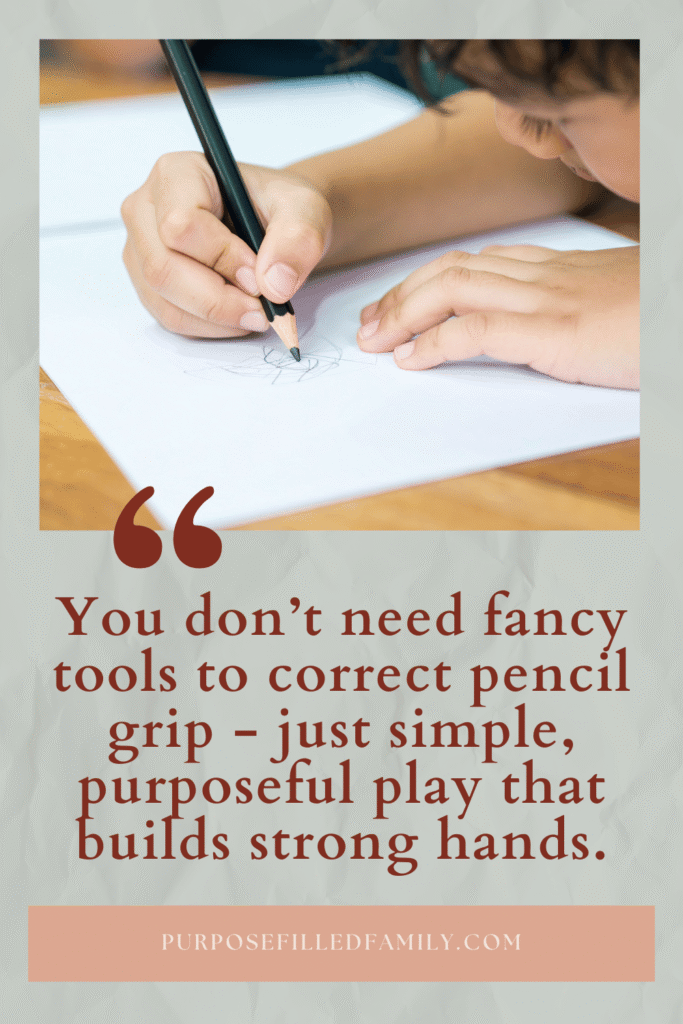
Here are five simple, surprising activities to help correct pencil grip. At first, these activities may not seem like they will correct your child’s grip, but remember that the point is to develop the underlying fine motor skills that children need in order to use a dynamic tripod grasp.
Vertical Writing
Writing, coloring, or drawing on a vertical surface such as an easel or even taping paper to a wall can be a great wayfor children to correct their child’s pencil grasp because it naturally positions their arms, wrists, and hands correctly for writing. Not only that, but allowing children to stand while coloring or writing on a vertical surface can increase their focus and attention as well.
OT Pro Tip: If you don’t have an easel or an open wall space for vertical writing, grab a large (2-3 inch) ring binder and attach your child’s paper to the front angled cover for a vertical position that can travel with your child!
Animal Walks
I could go on all day about the numerous benefits of crawling for young children, but today I will focus specifically on the benefits for correcting pencil grip. Bear crawls (crawling face down on hands and feet) and crab walking (crawling face up on hands and feet) provide sensory input to the shoulder, wrist, and hand muscles that can help prepare the body and mind for writing. Also, having children bear their weight through only their hands and feet helps to strengthen the muscles in both their arms and legs, allowing them to develop the motor control they need to correctly hold a pencil when writing.
Tummy Time Writing
Similar to vertical writing, having children write, draw, or color while lying on their stomachs has incredible benefits. It naturally encourages children to use their elbows to support themselves, which strengthens the muscles in the arms and hands. Also, it promotes an efficient dynamic tripod grip because children have to extend the wrist back in order to color, draw, or write while lying on their stomachs.
OT Pro Tip: To make it play-based, allow children to lay under a chair or table to create a “fort” for them to practice coloring or writing.
Squirt Gun Painting
[This activity works best outside in an open area because it can get messy.]
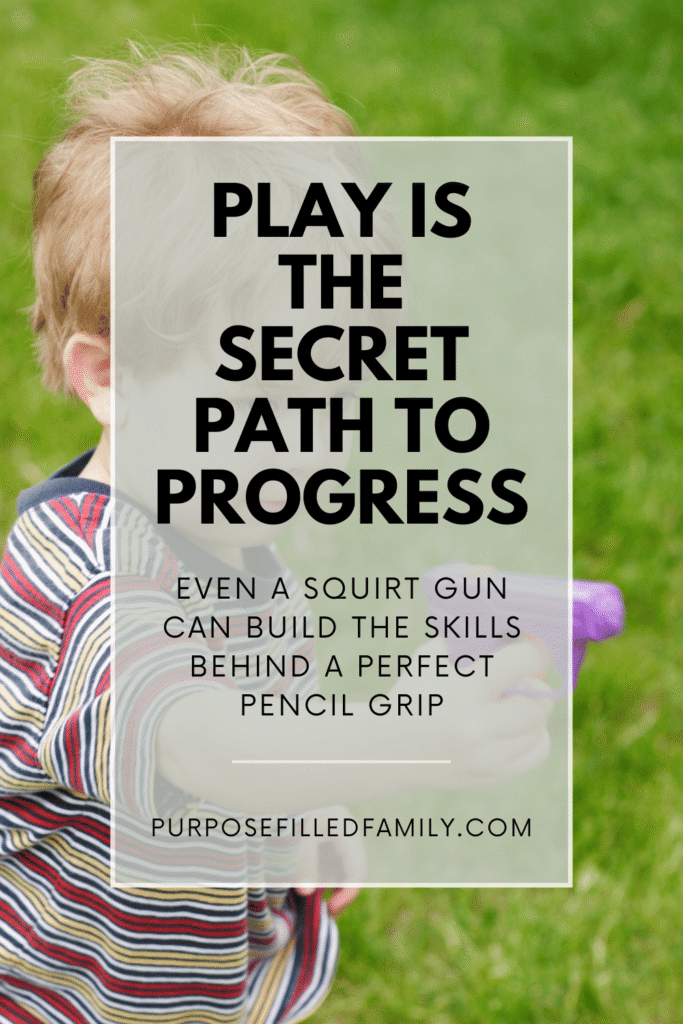
This is a super fun way to secretly practice your child’s pencil grasp development. Hang up a large sheet of paper or an old bedsheet in an open area, then fill up a squirt gun or spray bottle with colored water (water and food coloring work well). Have your child spray the colored water on the paper or bedsheet to create a “painting”. This fun activity works on strengthening the small muscles in a child’s thumb and fingers in order to prepare them to use a correct pencil grasp when writing
OT Pro Tip: Giving children a squirt gun or spray bottle filled with water and simply allowing them to spray into the air or at objects in your yard will also work, and kids love it – no setup required!
Yoga Poses
Teaching children simple yoga poses is a great way to strengthen their muscles for writing. Poses that encourage children to bear weight through their arms and hands are extremely beneficial for developing balance, stability, and the strength needed to use an appropriate dynamic tripod grasp when writing. Having your child hold the pose for a short period of time (e.g., 10-20 seconds) also builds up the endurance they need to write, color, or draw for extended periods of time as is often required when they go to school.
Please note that, as a Christian, I recommend yoga purely as an exercise activity and do not promote its use in spiritual practices.
When to Seek Professional Support for Pencil Grip
While many children develop these essential fine motor skills for correcting their child’s pencil grip on their own with consistent practice, there are times when it may be beneficial to seek professional help if you have additional concerns. You may want to reach out for professional support if your child has an inefficient poor pencil grip and:
- is over 6 years old
- Struggles with other fine motor activities (buttons, utensils, zippers, etc.)
- Has not yet established a dominate hand by age 5 or
- Complains of hand fatigue when writing
If any of these things are going on, you may want to look into talking to your pediatrician about occupational therapy services for your child, or send me a message and I can give you advice.
Final Thoughts
Correcting a child’s pencil grasp development doesn’t have to be stressful. By incorporating play-based activities like animal walks, squirt gun play, and vertical writing, you can help your child develop the essential fine motor skills they need to use an efficient functional pencil grasp without pain or hand fatigue.
Leave a comment below and let me know which activity has helped your child’s pencil grip!