
How to Support Your Sensory Seeker: Practical OT Strategies for Parents
Learn what a sensory seeker is, why children crave sensory input, and how to help them thrive with simple OT-approved strategies. Perfect for parents of active, sensory-driven kids.

“High energy”
“Always on the move”
“Risk-taker”
If any of these phrases describe your child, you may have a sensory seeker. While sensory processing difficulties are often seen in children with Autism Spectrum Disorder (ASD) or Attention Deficit Hyperactivity Disorder (ADHD), many children struggle with sensory issues in their daily lives with or without a diagnosis.
Parenting a sensory seeker can feel overwhelming and exhausting at times. It can be hard to understand why your child seems to never run out of energy or why they engage in risky or even dangerous behaviors.
Even more challenging is watching your child struggle with focus, impulsivity, or following directions and not knowing how to help.
As a mom of two young boys and a pediatric occupational therapist, I’ve supported many families through these same challenges. In this post, I’ll explain:
- What it means to be a sensory seeker
- Common sensory-seeking behaviors
- How to support your child at home and school with practical OT strategies

What Does it Mean to be a “Sensory Seeker?”
Think about a time when you feel focused, balanced, and most productive. Your body feels calm and your brain is alert and active. You are able to complete daily activities without much difficulty. This is called a state of regulation. When we are regulated, we are able to accomplish important tasks, engage in conversations, or participate in everyday life without much difficulty. For sensory seekers, however, it can be much more challenging for them to reach their optimal state of regulation.
Simply put, a sensory seeker is a person who craves more sensory input than most in order to reach a state of regulation. Sensory seekers have a nervous system that is under-responsive to sensory input, which is why they tend to seek more sensory experiences than their peers. Because of their high neurological threshold, they engage in frequent, intense sensory-seeking behaviors in order to meet their specific needs.
It’s important to remember that for many sensory seekers, this craving for input can feel insatiable. The more intense the input, the more dysregulated they can become. That’s why sensory seekers often seem fearless or engage in risky behaviors – they’re trying to meet their brain’s sensory needs.
For more information on sensory processing in children, check out my post Sensory Processing 101.
Signs Your Child May be a Sensory Seeker
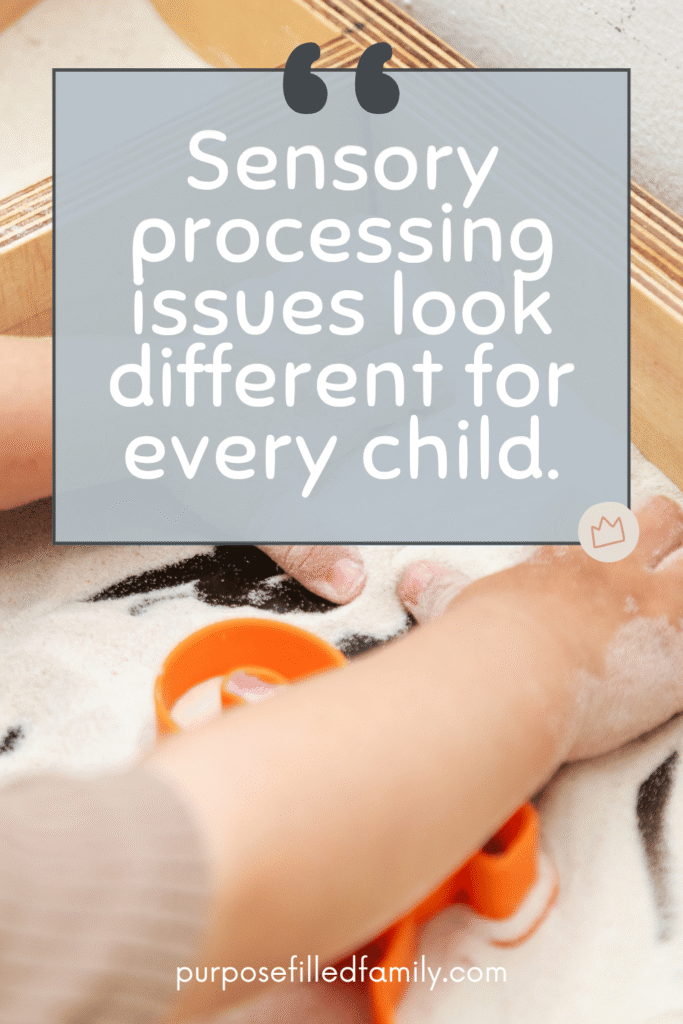
Sensory processing issues look different for every child, but there are some common signs that your child may be a sensory seeker. Examples of sensory seeking behaviors for each sensory system include:
Tactile Seekers (Touch)
- Always touches people, objects, clothing, etc.
- Craves messy play (slime, mud, etc.)
- Doesn’t notice when their face or hands are dirty
Auditory Seekers (Hearing)
- Makes frequent, repetitive, or loud noises
- Prefers loud music or noises
- Hums or sings to themselves
Visual Seekers (Sight)
- Stares intently at bright lights, people, or objects
- Spins or waves objects repetitively near their face
- Looks at objects out of the corner of their eye
Oral Seekers (Taste)
- Chews on non-food items
- Prefers crunchy, chewy, or spicy foods
- Puts objects in their mouth
Olfactory Seekers (Smell)
- Drawn to strong odors
- May smell objects or people repeatedly
Vestibular Seekers (Movement)
- Spins, jumps, or run excessively
- Looks for opportunities to hang upside down
- Fidgets in their seat or can’t sit still
Proprioceptive Seekers (Body Awareness)
- Crashes into people, furniture, or walls
- Plays too roughly with peers
- Enjoys lying under heavy blankets, pillows, or objects
How to Support Your Sensory Seeker
Observe their Needs
As a pediatric occupational therapist, this is always my first step in the evaluation process. When observing your child’s sensory needs, ask these questions:
- Which sensory systems are affected?
- What time(s) of day does my child seem most dysregulated?
- What routines or activities are occurring when my child is dysregulated?
Be intentional about observing your child’s sensory needs over a period of time rather than once or twice. This will help you notice any recurring patterns or triggers that may be affecting your child.
Provide Opportunities for Sensory Input Within Daily Routine
Once you have identified the times your sensory seeker seems to be more dysregulated, provide opportunities for sensory input before these times occur. For example, if your child begins to run or crash into furniture or people right before he leaves for school, give him opportunities for things like jumping on a trampoline, carrying a basket of clothes to the laundry room, or doing wall push-ups first thing in the morning. Providing these sensory experiences will help him meet his sensory needs in appropriate ways before they become too overwhelming for him to manage on his own.
This proactive approach is the foundation of what we call a sensory diet — a structured plan of sensory stimuli and activities that help a child maintain regulation. Sensory diets can reduce overstimulation and excessive sensory-seeking behavior, prevent meltdowns, and support better focus in both the home and educational settings.
OT Pro Tip: If you need support creating a sensory diet, a pediatric occupational therapist can design one tailored to your child’s specific sensory needs.

Stay Goal-Directed
For a sensory seeker, unstructured, repetitive, and intense sensory stimuli often leads to more dysregulation rather than helping them reach a state of calm and balance. Because of this, they need goal-directed sensory activities with a clear beginning and endpoint. Here are some simple examples:
- “Jump on the trampoline ten times, then do five wall push-ups.”
- “Carry this stack of books to the family room, then bear walk back to me”
- “Spin around five times, then swing for three minutes.”
Giving your sensory seeker a clear goal to accomplish (such as taking books to the family room) helps to provide the appropriate support to organize their sensory system and begins to move them from a state of chaos to calm and balance (or regulation!). It is also important to give a clear stopping point to the sensory input as sensory seekers have trouble recognizing when they are becoming overstimulated. Setting a time limit allows your sensory seeker to begin to self-regulate, or learn to reach that optimal state of calm, on their own.
OT Pro Tip: Use visual timers to help your sensory seeking child regulate more independently.
Match the Need
Deciding what type of sensory input to give your sensory seeker can be difficult, but a good rule of thumb is to match the sensory need with equal but organizing sensory activities. For example, if your sensory seeker enjoys excessive spinning, you can know from your observations that they have a need in their vestibular, or movement, system. Providing opportunities for goal-directed movement activities can help meet the same need for movement in a way that is calming to the body rather than overstimulating.
When deciding what activities to offer, match them to your child’s specific sensory system. Here are sensory strategies for each system to get you started:
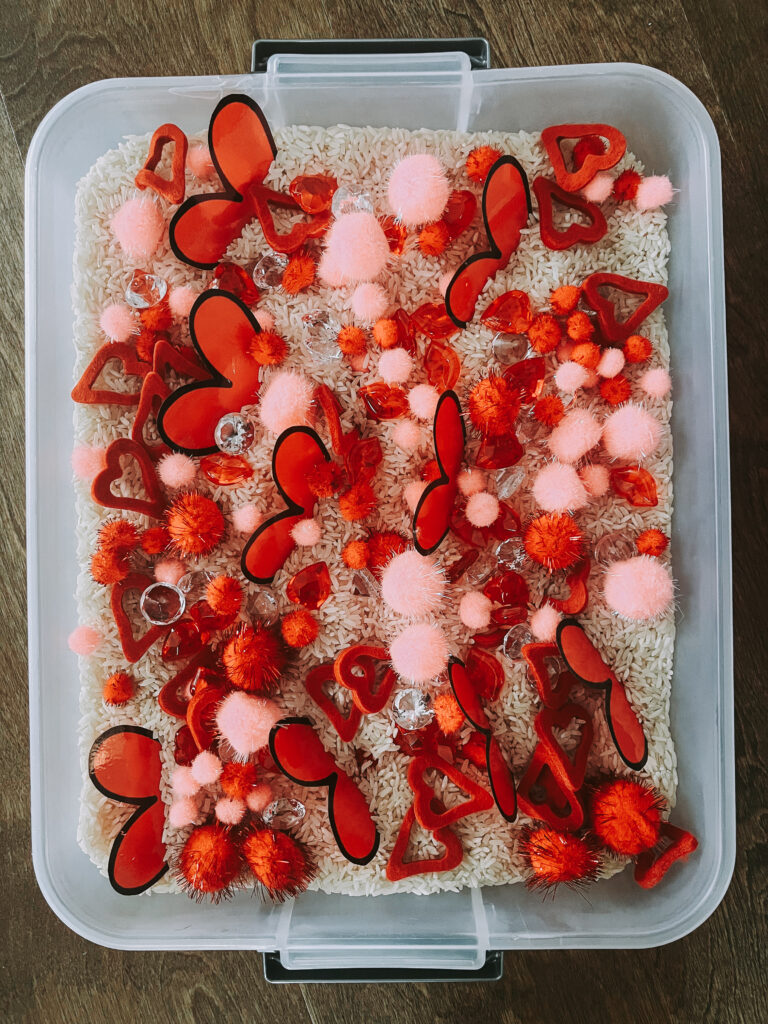
- Tactile Seekers: sensory bin with varied textures
- Auditory Seekers: rhythmic, calming music in headphones
- Visual Seekers: sensory bottle
- Oral Seekers: chewable necklace
- Olfactory Seekers: essential oil diffuser
- Vestibular Seekers: yoga poses such as downward dog or cat/cow
- Proprioceptive Seekers: wall push-ups/heavy work

Teach Self-Regulation Skills
From an early age, teach your sensory-seeking child how to begin to regulate on their own. This will likely be a skill that your sensory seeker will continue to develop throughout childhood and possibly into adulthood, so do not be discouraged when they still need your support to self-regulate as a pre-teen, teenager, or young adult. Self-regulation is an important skill that requires many high-level cognitive processes that aren’t fully developed until adulthood, so be patient with your sensory seeker.
A good way to start teaching these self-regulation skills is by narrating your sensory seeker’s needs when they arise. For example, you may say, “I’m noticing that your body is starting to get out of control. It looks like you need to take a deep breath, then jump on the trampoline for a few minutes.”
By expressing to your sensory seeker what it looks like to be dysregulated, they will begin to recognize these signs on their own and use the sensory activities they’ve practiced with you to self-regulate. This is the ultimate goal of course, but celebrating the small wins as your sensory seeker becomes more independent can boost their confidence and self-regulation skills over time.
When to Seek Professional Help for your Sensory Seeker
Everybody has varied sensory needs and many times they can be addressed by using the simple, effective strategies I’ve outlined above. However, there may be times when your sensory seeker’s needs may require professional support. You may want to reach out to your child’s pediatrician about professional support if:
- Your child’s sensory needs are negatively impacting daily life
- Your child engages in behaviors that are unsafe to themselves or others
- Your child struggles to participate in school
Occupational therapists can help to address your concerns, assess your child’s sensory profile, and create a personalized plan to help them regulate effectively.

Conclusion
If you’re parenting a sensory seeker, you already know that every day brings new challenges as well as new opportunities. Despite the challenges, sensory seekers are creative, energetic, and full of life.
Your understanding and patience are key to helping them succeed. When you provide the right support, your sensory seeker can turn their sensory difficulties into strengths like curiosity, resilience, and confidence. By recognizing your sensory seeker’s unique behaviors, offering safe outlets, and teaching them how to regulate, you’re equipping them with lifelong tools for success.









One Comment